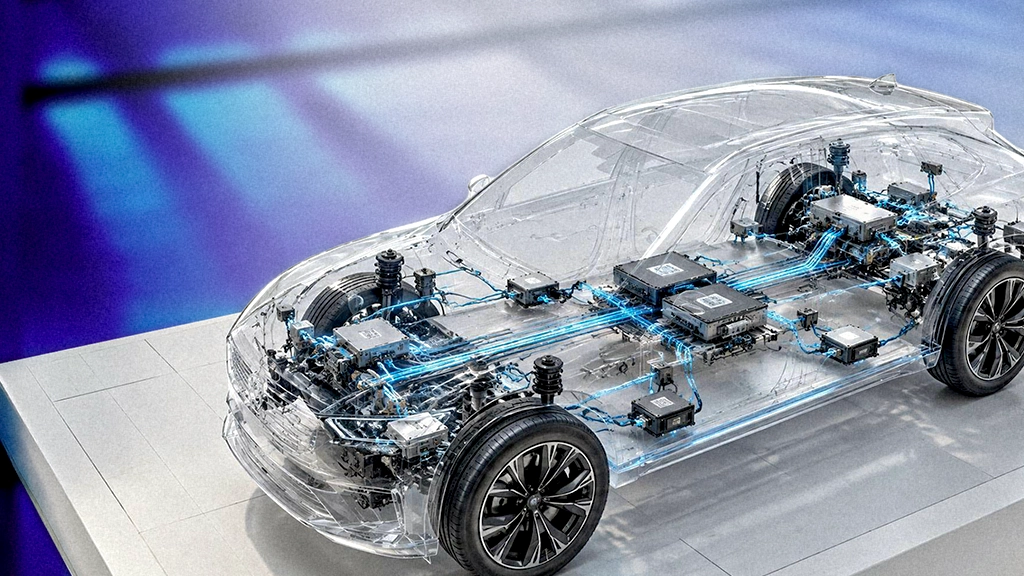
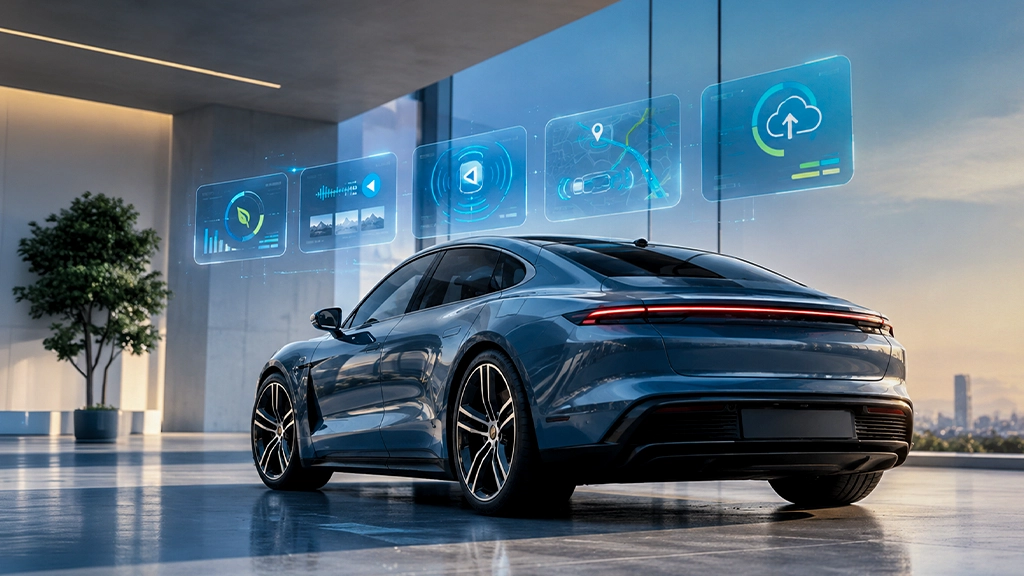
BYD released about 200 software updates in 2025. Tesla released 16, Toyota 8 and Volkswagen 5. The figures come from a single industry count and should be treated as indicative, but the gap is significant. It highlights an important difference in how automakers approach software development and connected-car monetization.
Five years ago, the industry plan was simple: fit the hardware in every car, then rent the features back to the owner. It has not survived contact with customers. Some of it worked, some of it embarrassed the brands involved, and Chinese carmakers took a different route altogether.
The pattern comes down to one idea. Customers pay for new capability that keeps improving. They refuse to pay for something they believe they already own. And the carmakers pulling ahead have stopped treating software as an add on to sell later. They treat it as part of the car.
This article examines what five years of connected-car monetization have taught the industry, which business models have generated revenue, which have backfired, and what European, Japanese and US OEMs can learn from Chinese carmakers.
Why Connectivity Alone No Longer Earns Anything?
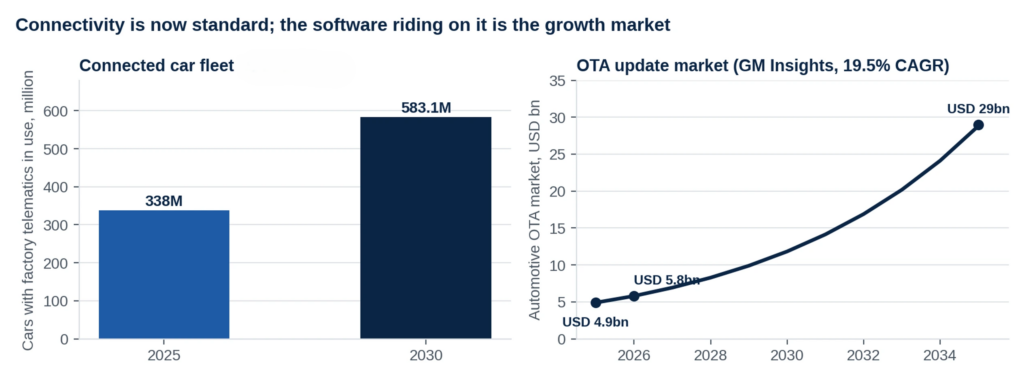
Connectivity is now a baseline, not a selling point. Industry research estimates that 83% of new cars sold in 2025 had embedded connectivity and expects 91% by 2030. The money is moving to what runs on top of that link. Market analysts size automotive software at USD 39 billion in 2025 and USD 72 billion by 2030, with driver assistance software growing fastest at 19.4% a year. These are estimates with different scopes, but they agree on the direction.
Regulation is shaping the field too. Any monetization plan has to be built inside these rules.
| Rule | What It Requires | Timing |
|---|---|---|
| UN R155 and R156 (EU and UNECE Markets) | Require certified cybersecurity and software update management systems. | New vehicle types from July 2022; all new vehicles from July 2024. |
| EU Data Act | Allows vehicle owners and, with consent, third parties such as repairers to access vehicle data on fair terms. | Applies from 12 September 2025. |
| China GB 44495 and GB 44496 | Set national cybersecurity and software update standards for vehicles. | New type approvals from 1 January 2026; cybersecurity requirements for existing types by 2028. |
| US Connected Vehicle Rule | Restricts certain connected-vehicle software and hardware linked to China or Russia. | Software restrictions from model year 2027; hardware restrictions from model year 2030. |
What Has Worked: GM, Tesla and Ford Offer Three Different Lessons?
The US market offers some of the clear examples of already-existing paid connected car services. General Motors, Tesla, and Ford have developed their businesses based on various combinations of connectivity, advanced driver assistance, and commercial software.
1. GM: Build the customer relationship before expanding paid services
General Motors has expanded OnStar into a more extensive range of connected services in order to keep its customers and create ongoing revenue. By the end of 2025, deferred revenue from OnStar services had reached about 5.4 billion US dollars, up 65% in a year, with recognized revenue in the second quarter of 2026 amounting to about 800 million US dollars, a 20% increase compared to the previous year.
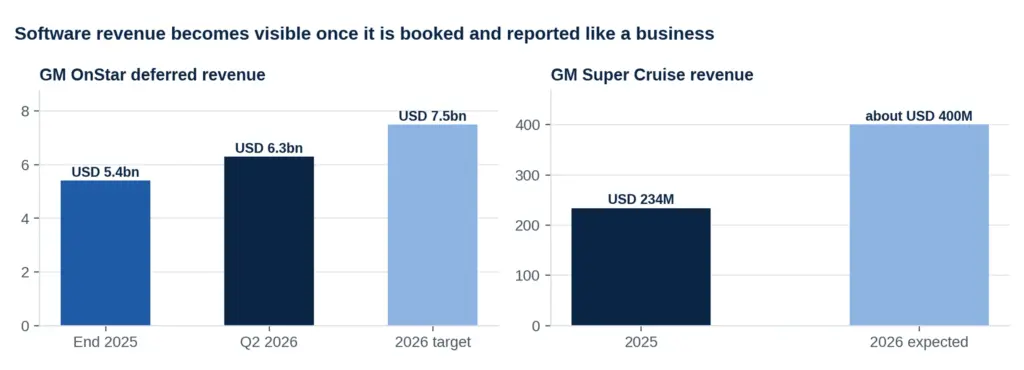
Figure 3: GM OnStar deferred revenue and Super Cruise revenue
Super Cruise has more than 620,000 subscribers and generated USD 234 million in revenue in 2025. GM has reported margins of about 70% for its broader OnStar business, while around 40% of Super Cruise customers renew after the prepaid period.
The lesson: Build a lasting relationship with customers and track subscriber growth, renewals, and margins in order to evaluate commercial performance.
2. Tesla: Make software worth paying for repeatedly
Tesla has incorporated vehicle hardware, software development as well as over the air updates into a single ownership experience. In February 2026 the company changed the way Full Self Driving (Supervised) was offered in North America by introducing it as a monthly subscription costing USD 99, stopping the option of buying it outright. Its Q2 2026 update stated that there were about 1.48 million active subscriptions.
The lesson: Recurring fees are easier to justify when software continues to improve and delivers value throughout ownership.
3. Ford: Business customers offer a clearer route to software revenue
Ford’s commercial software business highlights the potential of fleet services. According to remarks made at a conference in September 2026, Ford had about 1.6 million paid software subscribers, including 900,000 Ford Pro subscribers. The average revenue per user was around USD 14 per month, and the contribution margins exceeded 50%.
Ford’s BlueCruise business also illustrates the importance of conversion. Trials and subscriptions bought after the car give customers a chance to experience the feature before they agree to pay for it.
The lesson: Prioritize services which address tangible operational issues, and monitor conversion and renewal, rather than merely initial interest.
All three examples point to the same principle: customers are more likely to pay when software delivers clear, continuing value.
What has Backfired: Paying Twice and Data Nobody Agreed to Share
The failures share one mistake. Carmakers asked customers to pay for something they believed they already owned, or used their data in ways nobody expected. The table sets out the main cases, and each one points to the same lesson.
| Case | What Happened | Lesson |
|---|---|---|
| BMW Heated Seats | A monthly fee of about USD 18 for seat heating in South Korea was discontinued in September 2023 following public backlash. | Avoid charging recurring fees for hardware customers have already paid for. |
| Mercedes Acceleration Upgrade | Launched in the US at USD 1,200 per year, the upgrade was repriced in April 2023 with monthly, annual, and lifetime options. | Offer flexible ownership and payment options from the start. |
| Toyota Key Fob Remote Start | Remote start using the key fob required an USD 8 monthly connected-services plan, as reported in December 2021. | Avoid charging for functions customers previously received for free. |
| GM Driving Data | Driving data was shared with LexisNexis and Verisk. An FTC order was finalized in January 2026, including a five-year ban on sharing data with consumer reporting agencies. | Customer trust in data handling is essential to maintaining the right to operate. |
| Honda and Hyundai Data Sales | According to US senators in July 2024, Honda and Hyundai received approximately USD 0.26 and USD 0.61 per vehicle, respectively, from Verisk. | Raw vehicle data may offer limited revenue while creating significant privacy and reputational risks. |
| Wejo and Otonomo | Wejo entered administration in 2023, while Otonomo’s valuation fell from USD 1.4 billion at its SPAC stage to approximately USD 70 million. | Independent vehicle-data brokers struggled to establish sustainable business models. |
| CARIAD (Volkswagen) | Operating losses reached EUR 2.4 billion in 2024 and EUR 2.2 billion in 2025. Software delays affected the Porsche Macan EV and Audi Q6 e-tron. | Building every software capability in-house at once can be slow and expensive. |
| Level 3 Retreats | Mercedes paused Drive Pilot on refreshed S-Class and EQS models in January 2026, while Stellantis discontinued its Level 3 system in August 2025. | Prioritize monetization of technologies that can scale commercially, not just those that impress. |
What Buyers Will Actually Pay for in Connected Cars
The amount that customers are willing to pay for services offered by connected cars depends on the market and feature, making a single global pricing strategy ineffective. A study of automotive consumers around the world carried out in 2026 showed that 40% of respondents in Germany would not pay any extra for automatic over the air updates, whereas the figures in the United States, Japan, South Korea and China were 27%, 28%, 15% and 7% respectively. This reflects willingness to pay an additional premium, not the perceived importance of updates.
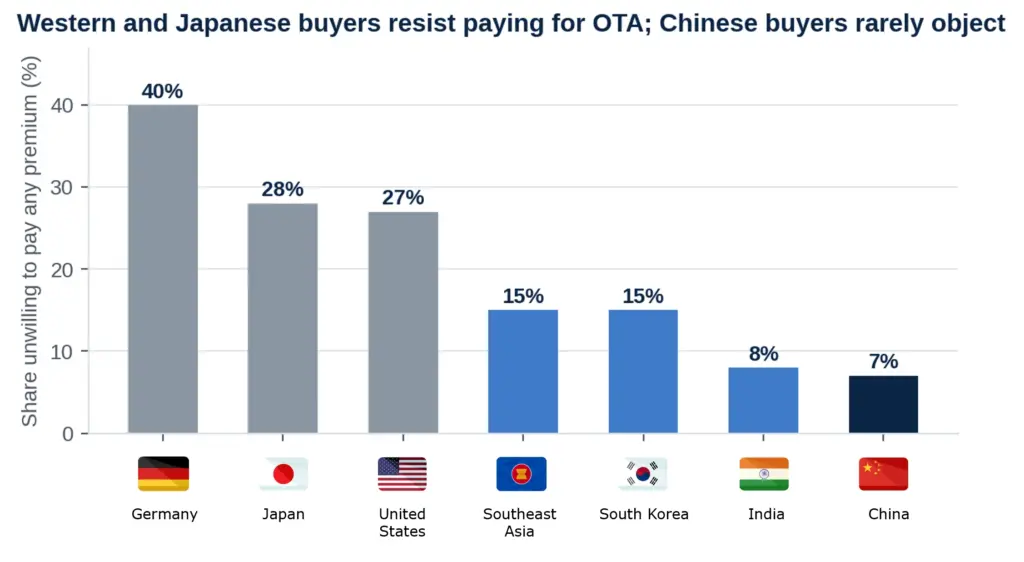
Figure 4: Share of buyers unwilling to pay any premium for automatic OTA updates
Services that offer quick and concrete benefits attract greater interest. In the various markets surveyed, between 58% and 85% were willing to pay for emergency assistance, and 47% to 83% would pay for anti-theft tracking. Subscriptions were slightly preferred to one-time payments, 39% to 30%, although willingness to pay was still below OEM prices.
Taken together, these findings suggest four priorities for pricing teams:
- Charge for outcomes, not the technology alone: Explain how a service improves safety, convenience or driving capability.
- Treat core connectivity as part of the vehicle proposition: Basic functions and essential updates may be more valuable as ownership benefits than as separate subscriptions.
- Test prices by market: Customer expectations in Germany or Japan may differ considerably from those in China or South Korea.
- Measure actual conversion: Survey responses provide useful direction, but trials, purchases, renewals and cancellations offer stronger evidence of commercial performance.
The opportunity remains substantial. The challenge is to price services around the benefits customers recognize, rather than the development costs or revenue targets that matter internally.
How Chinese Carmakers Rewrote the Rules?
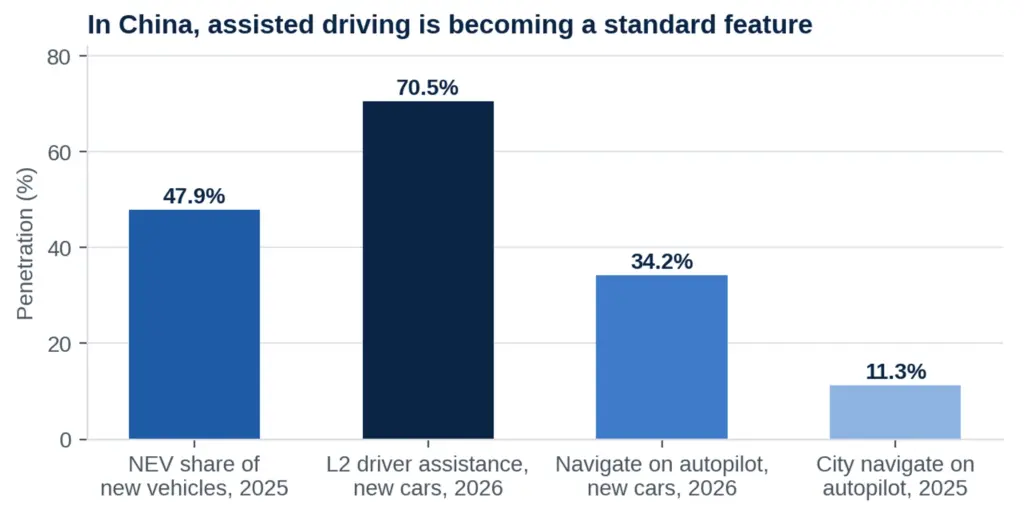
Figure 5: Electrification and assisted driving penetration in China
China sold 16.49 million new energy vehicles in 2025, 47.9% of all vehicle sales. In a market with a long price war, software became the main way to stand out. By 2026, 70.5% of new cars in China had L2 assistance and 34.2% had navigate on autopilot; city navigate on autopilot reached 11.3% in 2025, or 2.6 million cars.
BYD made the decisive move. From February 2025 it included God’s Eye assistance in the price, starting with the 69,800 yuan Seagull. The revenue comes from selling more cars, not from subscriptions, and the large fleet feeds the data. NIO took a similar view of ownership, giving first owners five years of assistance free.
Behind the carmakers sits a layer of technology suppliers that makes this speed possible. The table shows who does what, and how much of the software money now sits outside the carmakers themselves. For every other OEM, that turns the question into build or buy.
| Player | Model | Scale and Results |
|---|---|---|
| BYD | Included God’s Eye driver-assistance technology in vehicle prices from February 2025, starting with the 69,800-yuan Seagull. The lidar-equipped tier is available as a 12,000-yuan option. | 3.72 million equipped vehicles by August 2026; 4.6 million vehicle sales in 2025, including 1.05 million overseas sales. |
| Huawei (HIMA and Qiankun ADS) | Supplies an integrated technology stack to partner brands. The ADS package was priced at 35,000 yuan from July 2026, with some costs subsidized by automakers. | 1.9 million vehicles equipped with ADS; 589,107 HIMA deliveries in 2025; automotive business revenue of approximately 45 billion yuan, up 72%. |
| Xpeng | Develops its own technology stack and Turing chips. It also supplies technology to Volkswagen through the China Electrical Architecture (CEA). | Services revenue reached 8.34 billion yuan in 2025, up 66%; recorded its first quarterly net profit in Q4 2025. |
| NIO | Offers five years of driver-assistance features at no extra charge to first owners and provides battery swapping as a service. | 4,006 battery-swap stations and 120 million cumulative swaps by August 2026. |
| Momenta and Horizon Robotics | Supply driver-assistance software and automotive chips to multiple vehicle brands. | Momenta accounts for 65% of third-party urban driver-assistance systems; Horizon Robotics shipped more than 4 million chips in 2025. |
Release cadence as a weapon
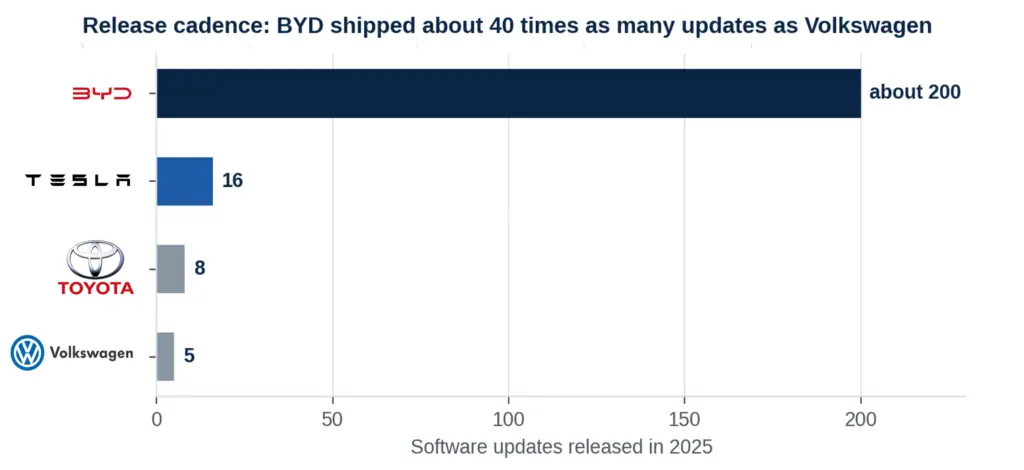
Figure 6: Software updates released in 2025
Chinese brands handle their cars like a phone. In 2025, BYD put out around 200 software updates, compared with 16 for Tesla, 8 for Toyota and 5 for Volkswagen. Chinese manufacturers increased the number of their software updates by 73% in 2025, whereas the premium brands managed only 22 updates throughout the year. Li Auto’s OTA 8.0 in September 2025 alone added 54 new features and 26 improvements. The same applies to new technology: at least 20 carmakers had incorporated or planned to incorporate DeepSeek models into their vehicle dashboards within weeks of its release in February 2025.
China’s Guardrails: Speed Has a Price
Speed came with various incidents. After a Xiaomi SU7 crash in March 2025 which resulted in three deaths, the MIIT asked car manufacturers on 16 April 2025 to cease using terms like autonomous or self-driving in their marketing, to reduce the frequency of their updates, to stop carrying out public beta tests, and to file each update with regulators. Xiaomi later recalled 116,887 SU7s via an OTA update. A mandatory national standard for combined driver assistance was issued on 2 July 2026 and will come into effect on 1 January 2027, and mechanical door releases will become mandatory for new models from January 2027.
Chinese Best Practices Worth Adopting
| Practice | What Chinese leaders do | What it delivers |
|---|---|---|
| Central compute and one code base | Few domain controllers, a single software platform across models | Fast, cheap updates for the whole fleet |
| Weekly or monthly release rhythm | Updates shipped in small, frequent steps | Owners see the car improve, and feedback loops shorten |
| Assistance as standard | Core driver assistance included even in entry cars | Large fleets that feed data and justify investment |
| Local partner ecosystems | Chips, maps, AI models and suppliers such as Huawei, Momenta and Horizon used where faster | Speed and lower cost than building alone |
| Cockpit as a living product | AI assistants, apps and voice updated like a smartphone | Daily engagement and brand loyalty |
| Selling the stack | Licensing software and architectures to other OEMs | A second revenue line beyond the car |
What European, Japanese and US Carmakers Should Do Next
Chinese brands sold about 811,000 cars in Europe in 2025, a 6.1% share, and reached a record 11.2% in July 2026. Volkswagen’s architecture with Xpeng entered series production in January 2026. The US connected vehicle rule bans Chinese linked software from model year 2027, which shields US software profits at home but not in third markets.
Each region starts from a different place.
- European OEMs have strong brands and a safety reputation, but slow-release cycles and the buyers least willing to pay for OTA. They need one central software platform, core features included in the price, charges only for real upgrades, and partners where their own stack lags. The EU Data Act is also a chance to turn compliance into a trust advantage. Chinese pressure will land first on entry and mid segment margins and on fleet sales.
- Japanese OEMs are leading in terms of quality, yet Toyota carried out only 8 updates in 2025, and its new Arene platform is introduced with the 2026 RAV4. They need faster releases without compromising their quality standards, assisted driving as standard on the more popular models, partners for AI cockpit features, and the reliability of the brand used to promote its safety services.
- US OEMs operate the most proven paid software businesses. They should ensure that subscriptions are linked to capabilities that continue to improve, safeguard customer data following the GM case, and reduce software costs per vehicle to compete with Chinese pricing in third markets.
A Practical 2026 to 2030 Roadmap for Connected Car Monetization
Car manufacturers can generate sustainable software revenue by following a sequenced approach that improves operations, validates customer demand and assesses commercial performance.
- Standardize software releases: Establish shared platforms, maintain consistent release cycles, and specify clear validation and approval requirements for each update.
- Define what customers should pay for: Classify the features into those which provide standard ownership benefits, those that are premium upgrades, and those that constitute ongoing services, based on customer expectations and delivery costs.
- Validate pricing before launch: Check the pricing by carrying out customer research and pilot studies involving purchase, subscription, and bundled options; monitor the rates of conversion, renewal, and cancellation.
- Build a trusted data proposition: Explain what data is collected, why it is needed, and how it benefits customers. Make consent central to the service model.
- Make informed build or buy decisions: Retain capabilities that differentiate the product and assess partners on integration costs, deployment speed and long-term control.
- Measure commercial performance: Track recurring revenue, subscribers, churn, renewals and contribution margins to assess whether services generate sustainable returns.
- Benchmark global competitors: Compare feature availability, pricing, update frequency and vehicle costs against Chinese and established carmakers to identify competitive gaps.
The aim is to connect software development with customer value, operational discipline and measurable commercial returns.
How Ingenious e-Brain Can Help?
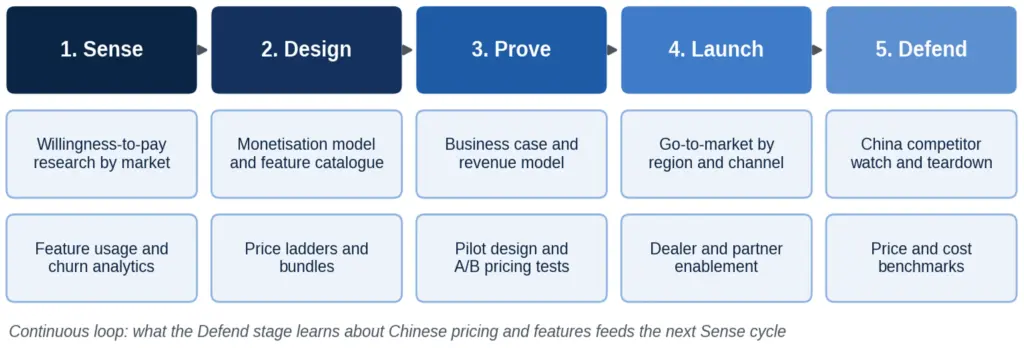
Figure 7: Ingenious e-Brain support across the monetization lifecycle
Most OEMs do not lack ideas for software revenue. What they lack is evidence on what buyers in each market will actually pay for, how their offer compares with what Chinese brands give away, and how much profit is exposed if they get it wrong. The answer for Munich, Nagoya and Detroit is rarely the same.
IeB supports this in two ways. The first is designing monetization models customers accept: willingness to pay research by market, a feature catalogue that sorts every feature into standard, upgrade or service, price ladders benchmarked against Tesla, GM, Ford and Chinese brands, and revenue models built around subscribers, renewals and deferred revenue.
| Module | What we do | What you receive |
|---|---|---|
| Willingness-to-pay research | Conjoint and price-sensitivity studies with buyers, owners and fleet managers in each target market | Price points and take-rate curves by feature, segment and country |
| Feature catalogue and ownership options | Sort every paid or planned feature into standard, upgrade or service, and test buy, subscribe and bundle options | A catalogue that avoids paying twice trap |
| Price ladders and bundles | Design tiers for assisted driving, connectivity, cockpit and fleet software, benchmarked against Tesla, GM, Ford and Chinese brands | A ready-to-launch price architecture |
| Revenue and margin model | Build subscriber, renewal, churn and deferred revenue scenarios, as GM reports them | A business case finance can sign off |
| Pilot and test design | Plan market pilots, trial-to-paid conversion tests and dealer incentives | A test plan with clear success measures |
| Subscription and pricing tracker | Track competitor software prices, bundles and promotions every month | Early warning when a rival changes the rules |
| Defense lever | How we support | What it protects |
|---|---|---|
| China competitor watch | Monthly tracking of Chinese launches, prices, OTA releases and standard features by export market | Time to react before share is lost |
| Feature and cost benchmark | Side-by-side comparison of what Chinese models include as standard against your offer and price | Pricing that holds up against free features |
| Market entry early warning | Monitoring of homologations, dealer openings, registrations and fleet deals by country | Dealer networks and fleet accounts |
| Patent and technology landscape | Mapping of patents and technology in driver assistance, cockpit AI and vehicle architecture | Freedom to operate and a clear view of where rivals lead |
| Partner and supplier scouting | Shortlists of software, chip and AI partners, including options that comply with the US rule | Faster, cheaper stacks without lock-in |
| Trade and regulatory tracking | Updates on EU minimum price deals, the US connected-vehicle rule, China GB standards and the EU Data Act | Plans that do not break on a rule change |
| Lifetime value defense | Design of after-sales, financing, insurance and fleet offers that Chinese entrants cannot yet match locally | Profit after the car is sold |
What We Focus On by Region
| Region | Where we focus first |
|---|---|
| European OEMs | Willingness-to-pay in Germany, France, the UK, Italy and Spain; benchmarks against BYD, Leapmotor, MG, Chery and Xpeng in Europe; price defense for entry and mid segments; turning EU Data Act compliance into a trust message |
| Japanese, Korean and other Asian OEMs | Protecting share in ASEAN, Australia, India and the Middle East, where Chinese exports grow fastest; faster release cadence that keeps quality discipline; partner options for cockpit AI and assisted driving |
| US OEMs | Pricing and renewal models for subscriptions; competitor tracking in Mexico, Latin America and the Middle East; compliant supplier options under the connected-vehicle rule; data consent design after the GM case |
Many clients begin with a 12 week sprint that ends with a tested monetization model for priority markets, a price and cost benchmark against the Chinese brands they meet most often, and a pilot plan ready for a board decision. IeB can start with a single market or a single feature line before scaling.
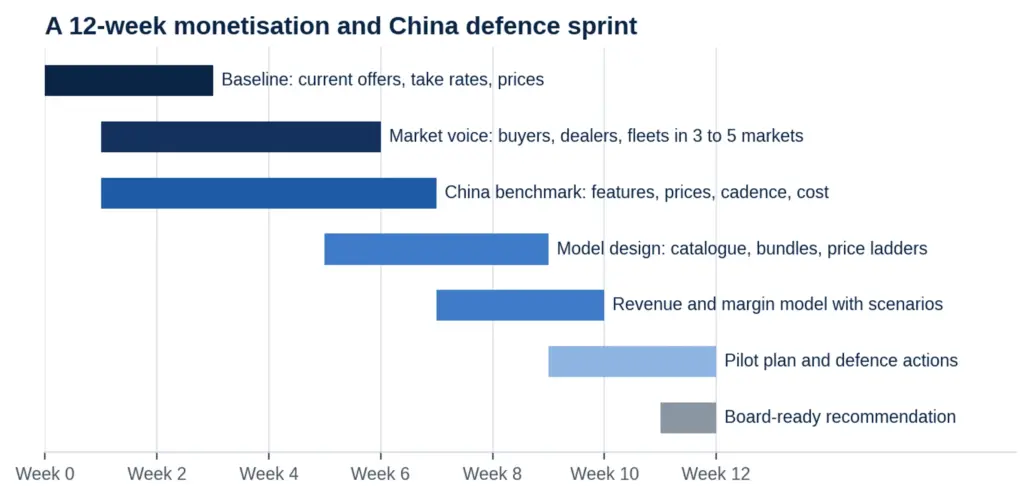
Figure 8: A 12-week monetization and China defense sprint
Conclusion: Build the Software Business Around the Customer and the Car
Five years of evidence show that connected car monetization can succeed, but only under specific conditions. GM, Tesla and Ford earn recurring revenue from services that give customers something new and keep improving. Charging for hardware already fitted to the car drew public criticism, and BMW and Mercedes reversed or repriced their offers within months.
Chinese carmakers took a different route. BYD includes driver assistance in the vehicle price and earns through volume, while Xpeng licenses its technology to other manufacturers. For European, Japanese and US OEMs, every route starts with a reliable release process. A fleet that received five updates last year has a delivery problem to solve before any pricing work begins.
At IeB, we help automotive companies track emerging technologies, assess partners and plan market entry through Technology Scouting & Monitoring, Technology Due Diligence and Go-to-Market Strategy support.
Talk to our experts by filling out the form below or emailing us at contact@iebrain.com.